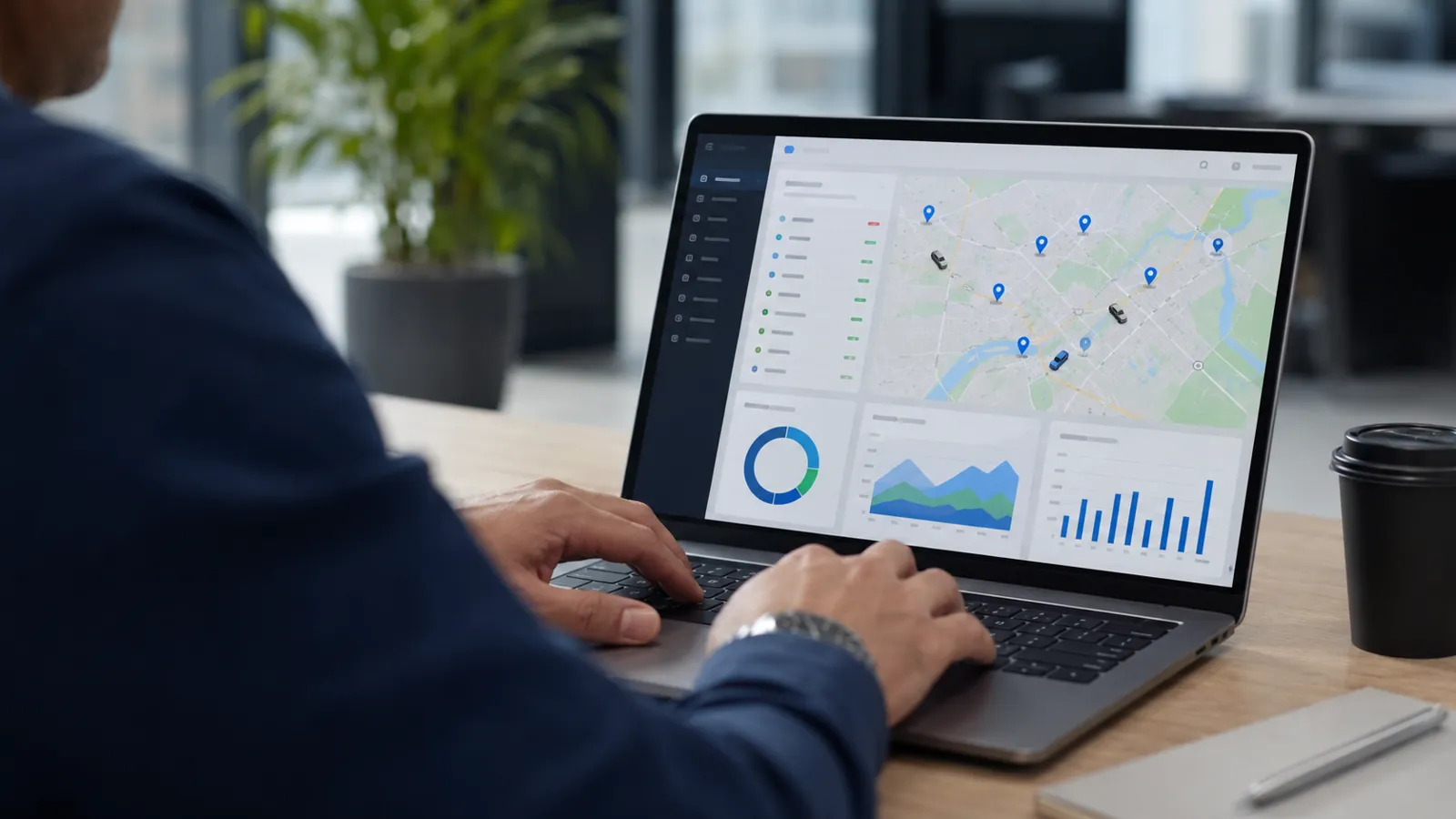
GPS fleet tracking is technology that lets businesses see exactly where their vehicles are — in real time and historically. It uses hardware installed in vehicles that transmits location data to a cloud-based platform accessible from any browser or phone.
How GPS fleet tracking works
GPS tracking devices use a combination of satellite GPS for location data and cellular networks to transmit that data to a cloud server. The device reads the vehicle's location every few seconds to minutes (depending on the plan) and sends it to a dashboard where managers can see all vehicles on a map.
- 1 Hardware: a plug-in OBD-II device or hardwired tracker installs in each vehicle
- 2 Data: location, speed, direction, engine status, and diagnostics are captured
- 3 Transmission: cellular networks send data to a cloud platform
- 4 Access: managers view a live map dashboard from desktop or mobile app
What GPS tracking data tells you
GPS fleet tracking captures more than just location. Depending on the platform and hardware, you can see:
- 1 Real-time vehicle position on a live map
- 2 Route history — where each vehicle went throughout the day
- 3 Speed at any point along the route
- 4 Idle time — how long the engine ran while stopped
- 5 Geofence alerts — notification when a vehicle enters or exits a defined area
- 6 Trip start and end times
- 7 Estimated mileage and fuel consumption
- 8 Engine diagnostics and fault codes (with OBD-II connection)
What GPS tracking cannot do on its own
GPS tracking is a vehicle management tool — it does not manage your business operations. If you need to:
- 1 Schedule and dispatch jobs to specific customers → you need field service software
- 2 Create work orders and collect digital signatures → you need field service software
- 3 Invoice customers and collect payment → you need field service software
- 4 Communicate job details to technicians → you need field service software
- 5 Track parts and materials per job → you need field service software
Common use cases for GPS fleet tracking
GPS tracking is valuable for businesses where vehicle management is the primary need:
- 1 Delivery and courier fleets: verify deliveries, optimize routes, monitor driver behavior
- 2 Construction: track expensive equipment and vehicles across job sites
- 3 Utilities and municipalities: monitor large vehicle fleets for efficiency and compliance
- 4 Service companies: as one component of a broader field service platform
Key takeaway
GPS fleet tracking tells you where vehicles are and how they're being driven. It's a starting point — most service businesses need GPS as part of a broader platform that also handles jobs, dispatch, and invoicing. Take the quiz to find the right fit for your operation. See common fleet tracking use cases and our top GPS fleet tracking picks.
Get a personalized recommendation
Take the quiz to find the right fleet software for your specific operation.