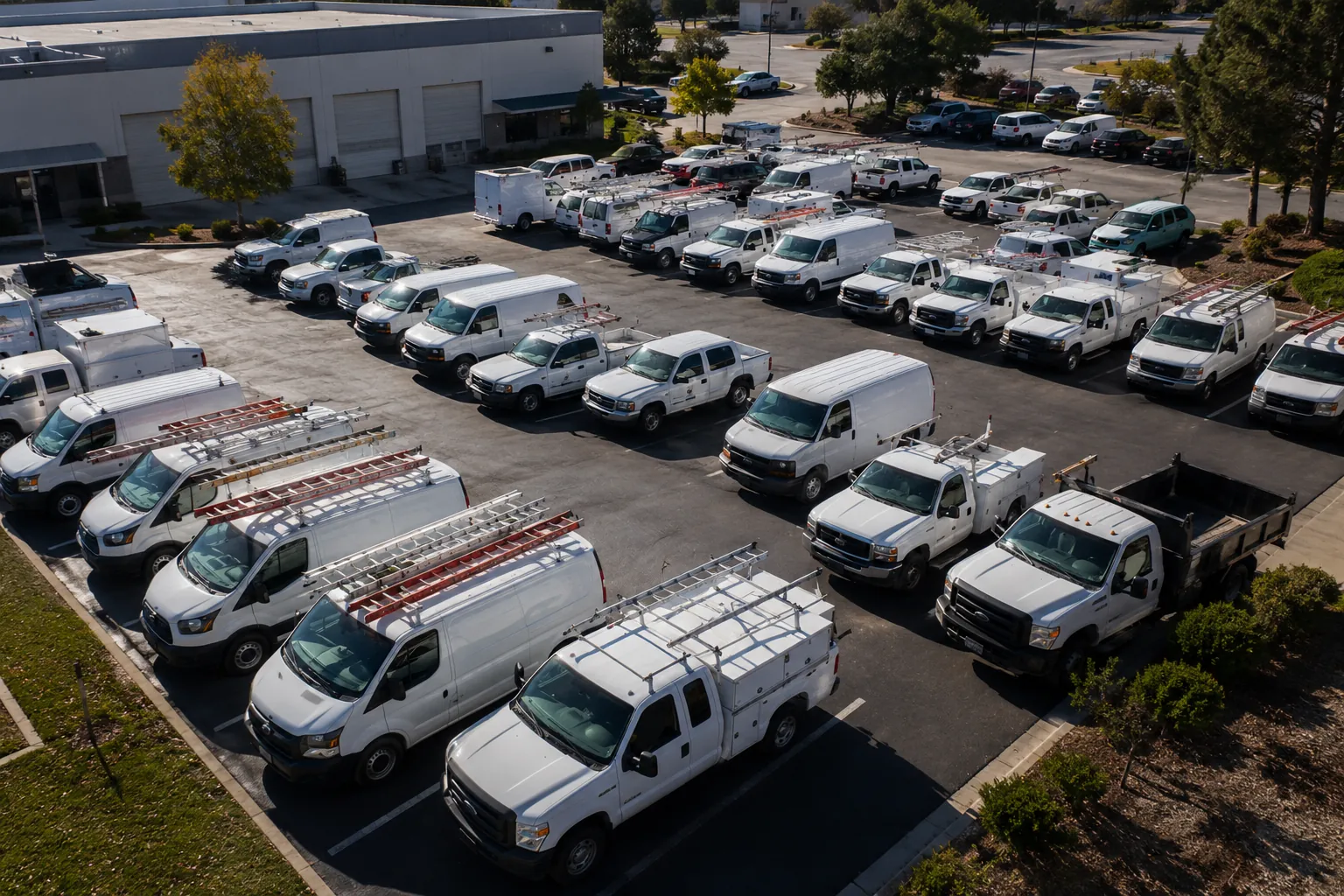
Dispatch is where fleet operations live or die. The quality of your dispatch decisions — which technician to assign, when to send them, how to communicate with customers — determines your response times, your customer satisfaction, and your revenue per vehicle. Fleet tracking software transforms dispatch from a guessing game into a data-driven workflow.
Most dispatch inefficiency comes from lack of information. Dispatchers can't see:
With fleet tracking, dispatchers see every vehicle on a live map. When a new job comes in, they can immediately identify the nearest available tech, see their estimated time to reach the job, and dispatch in seconds rather than spending 5–10 minutes calling or texting to find who's closest. This is especially valuable for emergency calls where response time determines whether you win the job.
Without fleet tracking, a significant portion of office staff time goes to calling or texting technicians to get status updates. Customers call asking when their tech will arrive. Dispatchers have to interrupt technicians mid-job. Fleet tracking eliminates this — the dispatch screen shows job status in real time, and automated customer notifications remove the inbound 'where is my tech?' calls entirely.
Historical route and job data lets you improve dispatch over time:
Fleet tracking transforms dispatch from reactive to proactive. The ability to see all vehicles in real time, assign nearest techs instantly, and automate customer communication reduces response times, improves job density, and eliminates wasted admin time. Take the quiz to find the right platform for your dispatch operation. For a marketing angle on the same data, see how garage door companies market with fleet visibility.
Take the quiz to find the right fleet software for your specific operation.
Popular best-of picks